
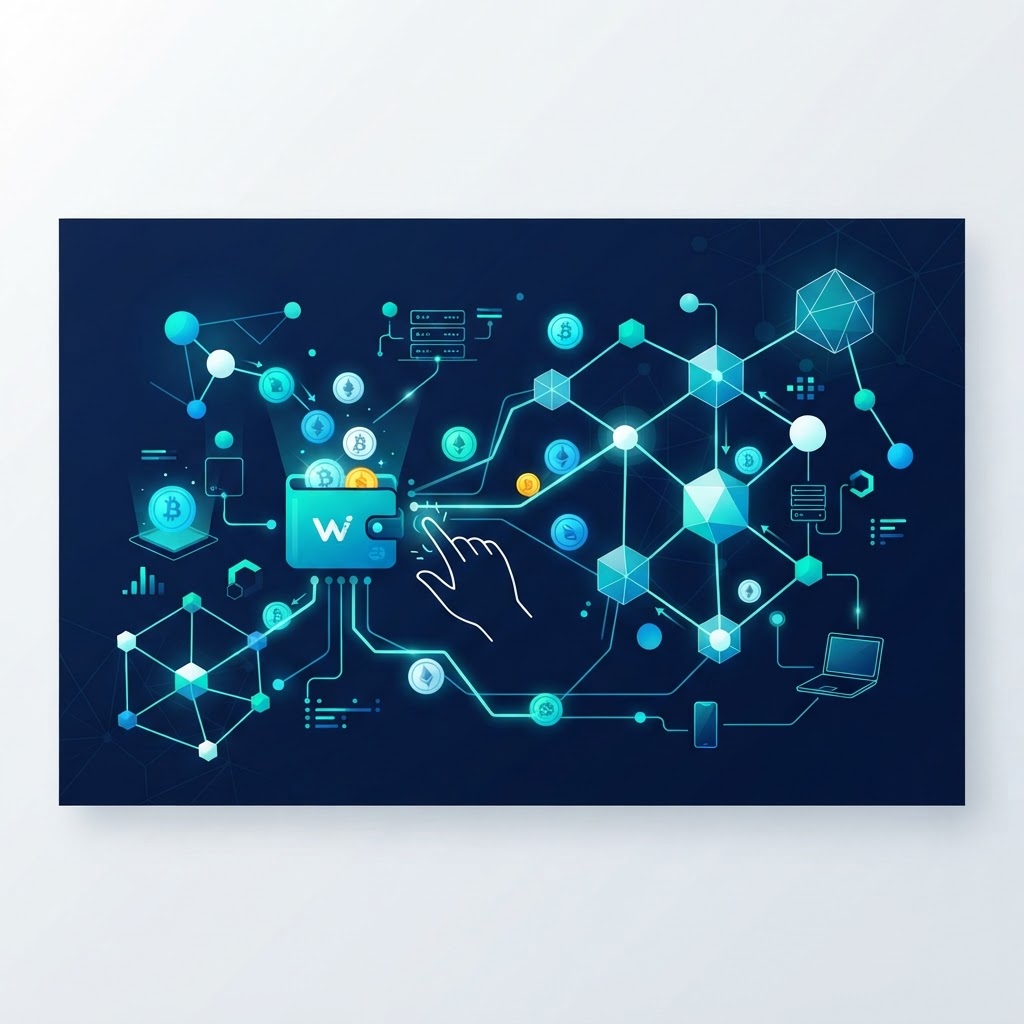
Getting Started with Web3
A complete beginner's guide to understanding blockchain, setting up a wallet, and navigating the world of Web3.
Getting Started with Web3
Web3 represents the next evolution of the internet - one built on blockchain technology that gives users ownership and control over their data, identity, and assets.
Web1 (1990s) was read-only static websites. Web2 (2000s) brought user-generated content and social media - but ownership and data stayed with big tech platforms.
Web3 shifts power back to users through:
- Decentralisation: No single company controls the network
- Ownership: You own your data, identity, and digital assets
- Permissionless: Anyone can participate without approval
- Trustless: Code enforces rules, not middlemen
A blockchain is a distributed, immutable ledger. Think of it as a Google Doc that everyone can view, no one can edit retroactively, and updates require consensus from the network.
Key concepts:
| Concept | Meaning | |---|---| | Block | A batch of verified transactions | | Chain | Blocks linked cryptographically | | Node | A computer running blockchain software | | Consensus | How nodes agree on valid blocks | | Gas / Fees | Cost to process transactions |
Digital money native to a blockchain. Common examples:
- BTC (Bitcoin): The first cryptocurrency - digital gold and a store of value
- ETH (Ether): Native token of Ethereum, used for gas fees and staking
- USDC / USDT: Stablecoins pegged to the US dollar (1 token = $1)
A crypto wallet stores your private keys - not your coins. Your assets live on the blockchain; the wallet is how you access them.
Types of wallets:
| Type | Examples | Best For | |---|---|---| | Browser Extension | MetaMask, Rabby | Everyday DeFi and dApp use | | Mobile | Trust Wallet, Phantom | On-the-go access | | Hardware | Ledger, Trezor | Long-term cold storage | | Paper | Physical key backup | Ultra-secure backup |
NOTESecurity Rule #1: Never share your seed phrase with anyone. Anyone with your seed phrase has full control of your assets.
- Go to metamask.io
- Install the browser extension (Chrome, Firefox, Brave, or Edge)
- Click "Create a new wallet"
MetaMask generates a 12-word seed phrase. This is your master backup key.
- Write it down on paper (do not screenshot or store online)
- Store it somewhere safe and offline
- Never type it into any website
- Buy ETH from an exchange (Coinbase, Binance, Kraken)
- Withdraw to your MetaMask wallet address (starts with )
0x... - You now have funds to use dApps
Smart contracts are self-executing programs stored on the blockchain. They automatically enforce rules without human intervention.
Example: A lending smart contract that:
- Accepts your USDC as collateral
- Lends you ETH automatically
- Liquidates your position if collateral value drops too low
Everything is handled by code - no paperwork, no bank, no approval process.
Decentralised applications (dApps) are apps built on smart contracts. They look like regular websites but connect to the blockchain through your wallet.
Popular dApps:
| Category | Examples | |---|---| | DEX (Exchange) | Uniswap, Jupiter | | Lending | Aave, Compound | | NFT Marketplace | OpenSea, Magic Eden | | Social | Lens Protocol, Farcaster | | Gaming | Axie Infinity, Gods Unchained |
- Set up a wallet and secure your seed phrase
- Buy a small amount of ETH to cover gas fees
- Try a simple swap on Uniswap (ETH to USDC)
- Explore lending by depositing on Aave
- Read project docs before investing in any token
- Join communities on Discord and X/Twitter
NOTEGolden Rule: Never invest more than you can afford to lose. Crypto is volatile. Start small, learn, then scale.
| Term | Definition | |---|---| | HODL | Hold on for dear life - don't sell | | DYOR | Do your own research | | Gas | Transaction fee on Ethereum | | Airdrop | Free tokens sent to early users | | Rug pull | Scam where developers steal funds | | DeFi | Decentralised Finance | | NFT | Non-fungible token - unique digital item | | DAO | Decentralised Autonomous Organisation |
Welcome to Web3. Take your time, stay curious, and never stop learning.
Found this guide helpful? Share it with others